Showing posts with label photography. Show all posts

Tuesday, May 31, 2011

Honey toast & Iced coffee


Since returning from the Dominican Republic, I've been thinking about the tropics and the trips I took to SE Asia and an iced coffee is like Proust's madeleine–it invariably makes me think of Cambodia. Drifting back over the better part of 12 years into the wet, heavy heat and the pungent, indecipherable smells and the sad, brown, beautiful faces.
The morning was the only time of the day that was comfortable. My moto driver, Koy, would pick me up before first light and we would sail through the cool morning air towards Angkor. The routine was always the same–honey toast and iced coffee in the massive grove of trees that face the main entrance to Angkor Wat. Most days we would drive on again to another temple further away–Banteay Srei or the Bayon or any of the dozens of other temples hidden in the jungle–but always toast and coffee in the growing light and heat in front of Angkor Wat. Once or twice I would let Koy sit on with his moto friends and walk off, alone, in the rising light over the causeway into Angkor Wat, the air alive and dancing with a million dragon flies. Perhaps pausing in the arcades of the second or third level as a massive thunder storm dropped all the heat and humidity and rain which the air could no longer hold. And then climbing again, through the concentric levels of the temple, ascending faster and steeper into the soaring central sanctuary and finally looking out over the thick, green landscape and the strange, dense, white noise of cicadas and birds rising up out of thin, evaporating mists.


But after days and days of temples, I told Koy I wanted to go out into the countryside, to see the people–to see the real Cambodia. He leaped at the idea, said it was what he had always desired to do but that his clients only wanted the temples. Thus began one of the great turning points in my photography–shooting people. We would see the most amazing and beautiful people: a shirtless grandfather holding the tiny hand of his grandchild, young boys fishing with curving, sculptured traps, women with huge bundles of kindling on their heads, walking down the road in peaceful resignation. And for the first time I had the nerve and courage to stop people, to proactively make the picture. Up to that point, my photography, much like my personality, was invisible–like a fly on the wall. Taking a picture was simply the choosing of a moment or a view of which I couldn't interfere–to some degree wasn't even present for. But out in the endless, exposed, flat expanses of rice paddies and floodplain surrounding Angkor, I began to fall in love with photographing people. Just a twin-lens Rolleiflex, a pocket full of Tri-X and the courage to stop a stranger, move them, arrange them–to create an image rather than just taking a snap.

Tuesday, May 24, 2011

The Cacao Road


My conception of this blog, from the beginning, was to be a window into and an outlet for the things that go on in my life outside of being a professional photographer
- cooking, gardening and raising two kids. In my mind they're co-mingled anyway. Most photographers, of course, use their blogs as a marketing tool–marketing in the social mediasphere. That seemed a little redundant (what's the point of the website?) and I'm admittedly not the most social media savvy person in the world.

But I'm just back from a truly amazing trip to the Dominican Republic with Alex Whitmore of Taza Chocolate and I thought, what the hell, let's mediasphere this sucker. I've been shooting for Taza for many years now and think we all realized, at some point, that the growers and producers of the cacao beans was about all we were missing to tell the complete story - from "bean-to-bar" as they say.

A special shout-out to Alex for making it all happen and assisting me in my attempt to drink all the ice-cold Presidentes in the western Dominican Republic. And to Kate Cavallin and Emily Stone for much the same reasons. Lastly to all the farmers and cacao plant workers who were unfailingly kind and patient and generous.


Monday, January 3, 2011

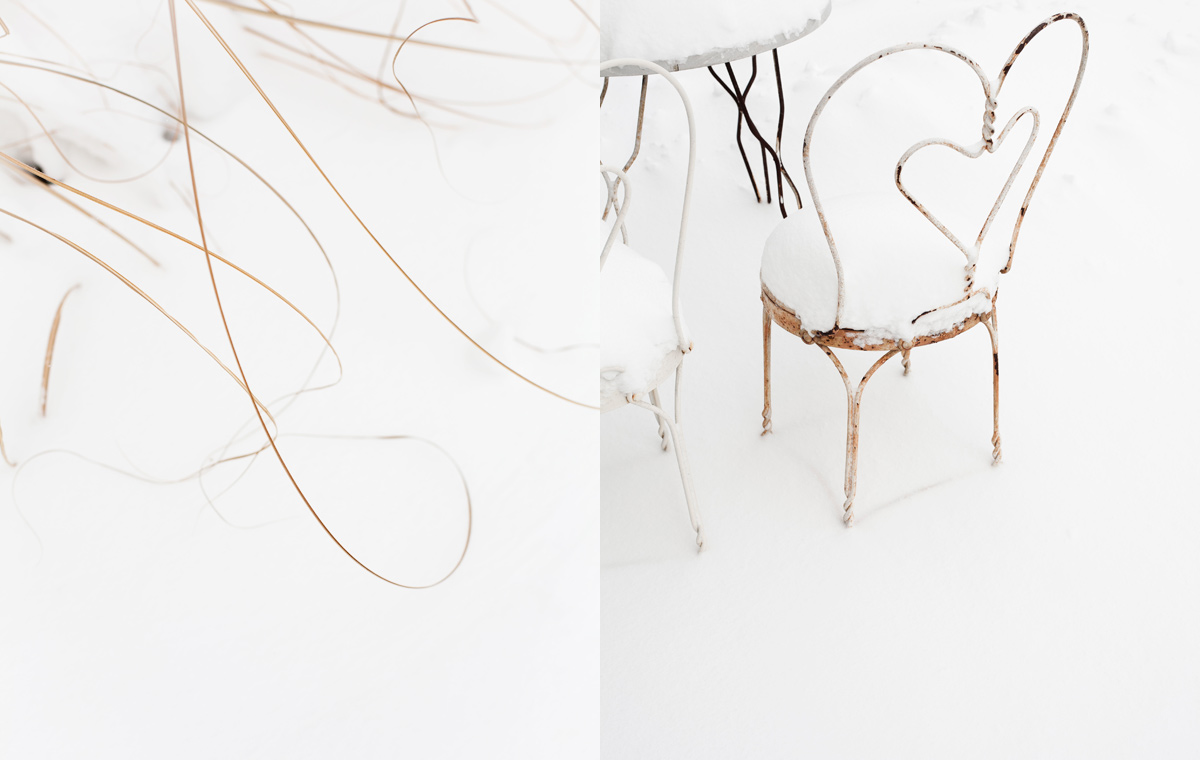
A Winter's Garden


"Even in winter an untidy garden is an eyesore. Keep mulches of straw and leaves well held in place."

"Between now and the first of March prune your grapes."

-Richardson Wright


The snow falls and falls
The mountains and meadows sleep.
Only an old mill
Stays awake.

-Okakura Ichijitsu

Sunday, November 28, 2010

Magic


It's been funny to watch the child learn how to use a camera phone. Taking pictures, for her, will be second nature - like eating or breathing. She's on her second decommissioned iPhone and has no problem turning it on and going to the camera app. I'll hear the click of the "mirror" and the whine of the "motor drive" and then she'll announce the subject of the picture: "Papa" or "Sadie's foot!" She's currently working on a couple of "series" – the ceiling fan in her room (whilst having her diaper changed) and an abstract, Rothko-esque series of black and orange (her finger over the lens.) I think to myself that if she sticks with it over the next 15 or 20 years she'll turn out to be a much more accomplished photographer than her father, who waited into his thirties before taking up a camera with any real seriousness.

But I also realize how different taking a picture is now compared to when I was teaching myself photography. There is an immediacy to taking snaps with a phone that is at once literal and at the same time virtual - looking at a tiny screen to frame the shot. It is akin to all the other screens we stare at every day of our lives (computers, televisions, DVD players) – life-like but not completely real. And disposable. The image itself (if you can actually call it that) is what? Is where? Bits of electronic information? A series of ones and zeroes? Even as a professional photographer, you simply trust that digital images are there... somewhere.

Shooting film was an altogether more precious affair. It wasn't just the care and precautions you took in handling such light sensitive material but the care and caution you took to make sure each frame was exposed properly – or at the very least, adequately. You had to know or be reasonably sure because there was no little picture on the back of the camera. And for anyone who processed and printed their own black and white film, taking a picture became an exercise in thinking in negative. "Expose for the shadows - develop for the highlights" was the mantra you lived by. Holding up a freshly developed roll of film to the light, you knew if you had succeeded or failed. Were the highlights so dense and black that you'd never be able to see any detail in them? Was there absolutely nothing in the shadow areas? Would making a decent print prove to be impossible? And every image was precious because of the time or effort or expense involved. But at the end of the day it was something you held in your hand or hung on the wall.

Perhaps I'll set up the darkroom some day and stand in the strange, warm orange light and watch my daughter's wonder as images appear from nothing in the developing tray, as if by magic.